
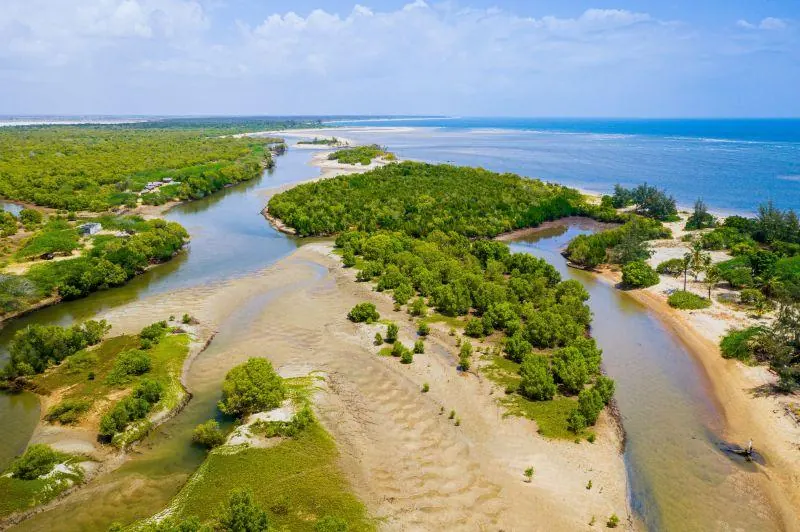
Mangrove forests grow where land meets sea. Along Kenya's coast they are part of daily life: a source of fish, wood and income, and a natural defence against waves and erosion. They are also among the most valuable ecosystems for tackling climate change.
What Mangroves Do
- Protect the shoreline. Dense roots slow waves and storm surges and hold sediment in place, reducing erosion.
- Support fisheries. Mangroves are nurseries for many fish, crabs and prawns that coastal communities depend on.
- Store carbon. Mangroves store large amounts of carbon, much of it in waterlogged soils. This is often called blue carbon.
- Sustain livelihoods. Well-managed mangroves support fishing, beekeeping, ecotourism and sustainable wood use.
What Makes Restoration Succeed
Planting seedlings is the easy part. Many restoration efforts fail because the underlying problem was never fixed. Successful projects tend to share a few features:
- Fix the water first. Mangroves need the right tidal flow. Restoring hydrology often matters more than planting.
- Right species, right place. Different species thrive at different positions in the tidal zone.
- Community ownership. Communities that help plan the work and share the benefits protect the forest long after planting.
- Long-term monitoring. Survival rates, growth and livelihood benefits should be tracked for years, not months.
Learning from Kenya's Coast
Kenya already has community-led examples. Mikoko Pamoja in Gazi Bay is widely cited as one of the first community projects to fund mangrove protection and restoration through the sale of carbon credits, with income supporting local water and education projects.
Our Mangrove Squares concept builds on these lessons by linking restoration plots with community livelihoods and resilience planning.